Categories
Pastoral Letters

Pastoral Message July 31, 2022

Dear Brothers and Sisters in Christ,

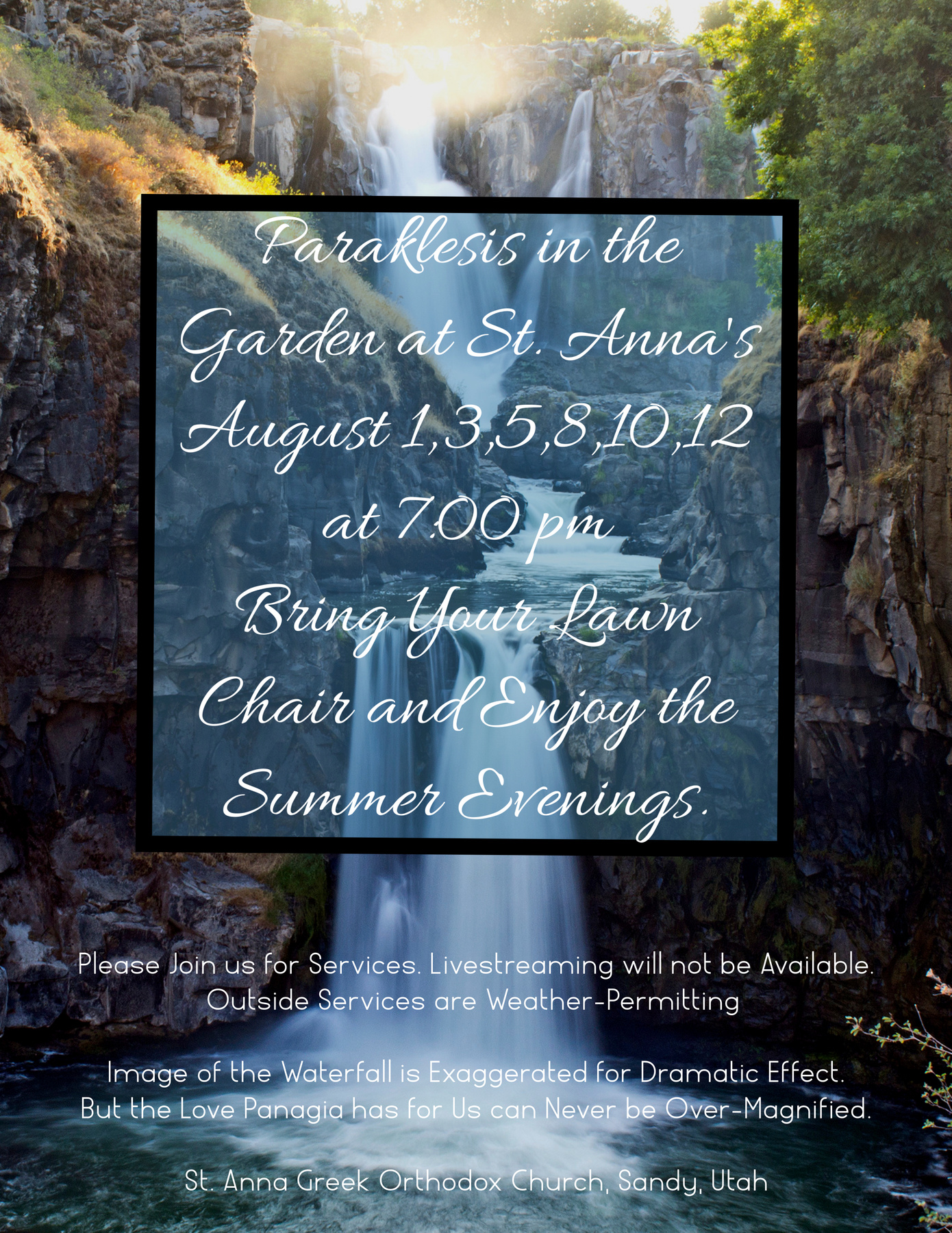
Greetings from the Parish Fishing Trip at Strawberry Reservoir! The time spent up here in fun and fellowship has been a tremendous blessing to the community. While I will remain up here for the celebration of the Divine Liturgy tomorrow morning, Fr. Elias will be at St. Anna’s. Enjoy the blessings of Sunday Worship, either up at the lake or down at the church! Indeed, Sunday will be beautiful. And then, of course, please make your preparations for the following Monday as the Fast of the Dormition begins. And with the Fast, we also receive the lovely opportunity to pray the Paraklesis Service for the next two weeks. 

Please receive and appreciate the following thoughts on the season by Fr. Alexander Goussetis, the director of our Greek Orthodox Archdiocese Cener for Family Care. 

On August 15th, Orthodox Christians celebrate the Dormition or Falling Asleep of the Theotokos. This feast honors the Virgin Mary, through whom the mystery of the Incarnation took place. The two weeks preceding the feast, August 1-14, represent a time of prayer and fasting. Liturgically, the Church offers a wonderful prayer service called the Paraklesis to the Theotokos.

For anyone who suffers from grief, depression, sorrow, or anxiety, the Paraklesis is a welcome salve to the soul. Although the gospel message of Jesus Christ is one of joy, the Paraklesis service recognizes that everyone, from time to time, experiences emotional and spiritual pain. Rather than isolating ourselves or feeling shame over our distress, the Paraklesis extends to us an invitation to share that pain with the

Theotokos, asking for her prayers and comfort.

Listen to these verses from hymns chanted during the service:

I entreat you, O Virgin, disperse the storm of my grief, and my souls most inward confusion, scatter it far from me…

Heal me from the ills, which the passions bring, most pure one, make me worthy of your guiding care. And unto me grant health, through your intercessions and your prayer.

Whatever emotional or spiritual state we find ourselves in, the message throughout the Paraklesis service is that God accepts and affirms us. We are welcomed and consoled whether our suffering is from despair or hopelessness, fear or isolation, grief or rejection. It is important to note that not once does the Paraklesis attribute our suffering to a lack of faith. Instead, we are allowed to see things as they are and to give voice to our feelings. Being permitted to name things as they are and not as they “should” be or “must” be can be cathartic and transformative.

The Paraklesis service, however, does not leave us in our wounded state. We are invited to start where we are emotionally and spiritually, and to slowly ascend to enlightenment, peace, hope, and the knowledge that God is the Physician of our souls and bodies. Listen to these verses that illustrate this point:

Pure one fill my heart, with a merriment, a happiness; bestow on me your spotless joy…

With the brightness of your light, dispel the darkness of my sins, O bride of God who gave birth to the divine and eternal Light!

We seek to pass through our sorrows, not to revel in them. As much as we cannot hide from the experience of darkness, so too we can never become so accustomed to dwelling therein that we do not try to find the light. This service is a holy avenue toward that light.

So how can families benefit liturgically from the Dormition fast?

  1. Attend as many of the Paraklesis services as you can. Offered on most weeknights, the child-friendly service is completed in less than one hour. By following along in the service book or chanting together with the congregation, the Paraklesis will offer hope and inner peace on daily basis. Many find the melodies so uplifting and infectious that they begin chanting portions of the service at home during their family prayer time.
  2. Help your children write a list of names of those whom you would like to intercede for and submit it to your parish priest. The Paraklesis service not only seeks the intercessions of the Theotokos for ourselves, but we are called to intercede for others. Writing the names of friends and foes on a prayer list is a concrete expression of our love for others.
  3. Either for yourself or with older children, write a list of concerns and pray about them during the service. Jesus wants us to share with him all of our thoughts, desires, and challenges in life. Writing a list of concerns and lifting them up to God is a sign of trust and openness. It welcomes God into the most intimate places of our soul.

Listen to the words of one of the final hymns of the Paraklesis service:

O Mother of God most high . . .

You are joy to the distressed; you are strength to the oppressed; you are food to those who sink into despair.

You console strangers; you support the blind; you visit the sick. You are shelter to the weary; you are comfort to the crushed; you are heavenly assistance to the orphans.

Mother of our God, guard me with care within your sheltered arms.

With God’s grace, may we enter this Dormition fast period with a sense of purpose and expectation.

For the most part, our Paraklesis Services will be celebrated outside in our Garden. Bring your lawn chair. Enjoy the Night Air. Gather under the protection of the Theotokos. 

With Much Love in Christ,

Fr. Anthony Savas
Protopresbyter
Categories
Bulletins

Weekly Bulletin for July 31, 2022

Weekly Bulletin for July 31, 2022 Paraklesis in the Garden 2022 Philoptochos Invitation Red Cross Blood Drive

Categories
Bulletins

Weekly Bulletin for July 24, 2022

Weekly Bulletin for July 24, 2022 Name Day Picnic 2022 Philoptochos Invitation Red Cross Blood Drive

Categories
Pastoral Letters

Pastoral Message July 17, 2022

Adorned with the beauty of Purity, O Virgin; crowned with the stigmata of martyrdom; stained with the blood of your struggles; and brilliantly radiant with healing wonders, piously, O Marina, you received the trophy of victory for your struggles.

Kontakion Hymn of St. Marina

Dear Brothers and Sisters in Christ,

Tomorrow, as we gather for Sunday Services, we will commemorate one of the most popular and well-known Woman Martyr Saints, St. Marina of Antioch. She, along with others like Ss. Barbara, Katherine, and Paraskevi are remembered for their bravery, grace, witness, and strength.

The Holy Great Martyr Marina was born in Asia Minor, in the city of Antioch of Pisidia (southern Asia Minor), into the family of a pagan priest. In infancy she lost her mother, and her father gave her into the care of a nursemaid, who raised Marina in the Orthodox Faith.

Upon learning that his daughter had become a Christian, the father angrily disowned her. During the time of the persecution against Christians under the emperor Diocletian (284-305), when she was fifteen years old, Saint Marina was arrested and locked up in prison. With firm trust in the will of God and His help, the young prisoner prepared for her impending fate.

The governor Olymbrios, charmed with the beautiful girl, tried to persuade her to renounce the Christian Faith and become his wife. But the saint, unswayed, refused his offers. The vexed governor gave the holy martyr over to torture. Having beaten her fiercely, they fastened the saint with nails to a board and tore at her body with tridents. The governor himself, unable to bear the horror of these tortures, hid his face in his hands. But the holy martyr remained unyielding.

Thrown for the night into prison, she was granted heavenly aid and healed of her wounds. They stripped her and tied her to a tree, then burned the martyr with fire. Barely alive, the martyr prayed: “Lord, You have granted me to go through fire for Your Name, grant me also to go through the water of holy Baptism.”

St. Marina is also known to have been tormented in her prison cell by a demon, manifested as a dragon. Finding a hammer, she beat on the demon, thus identifying her as the “vanquisher of demons.” This is why she is often depicted ichnographically with a cross in one hand, and a hammer in the other.  

Hearing the word “water”, the governor gave orders to drown the saint in a large cauldron. The martyr besought the Lord that this manner of execution should become for her holy Baptism. When they plunged her into the water, there suddenly shone a light, and a snow-white dove came down from Heaven, bearing in its beak a golden crown. The fetters put upon Saint Marina came apart by themselves. The martyr stood up in the fount of Baptism glorifying the Holy Trinity, Father, Son, and Holy Spirit.

Saint Marina emerged from the fount completely healed, without any trace of burns. Amazed at this miracle, the people glorified the True God, and many came to believe. This brought the governor into a rage, and he gave orders to kill anyone who might confess the Name of Christ. 15,000 Christians perished there, and the holy Martyr Marina was beheaded. The sufferings of the Great Martyr Marina were described by an eyewitness of the event, named Theotimos.

Up until the taking of Constantinople by Western crusaders in the year 1204, the relics of the Great Martyr Marina were in the Panteponteia Monastery. According to other sources, they were located in Antioch until the year 908 and from there transferred to Italy. Now they are in Athens, in a church dedicated to the holy Virgin Martyr. Her venerable hand was transferred to Mount Athos, to the Vatopedi monastery.

As we learn of the lives of the saints, it is my prayer that we acquire strength and inspiration from their tribulations, and intercessions before God through their pious prayers. St. Marina, pray for us!

Please be advised that this week, we will celebrate two weekday services. On Wednesday, we will celebrate the Feast of The Great Prophet Elias, and on Friday, two other pillars of the Church’s synaxis of women saints: St. Mary Magdaline, Myrrh Bearer and Equal to the Apostles, together on the shared Feast Day of the Virgin Great Martyr Markella of Chios. Both services begin with the Orthros at 8:00 am followed by the Divine Liturgy at 9:00 am. 

With Much Love in Christ,

Fr. Anthony Savas
Protopresbyter

Categories
Bulletins

Weekly Bulletin for July 17, 2022

Weekly Bulletin for July 17, 2022 Name Day Picnic 2022 Red Cross Blood Drive

Categories
Bulletins

Weekly Bulletin for July 10, 2022

Weekly Bulletin for July 10, 2022 Name Day Picnic 2022 Red Cross Blood Drive

Categories
Bulletins

Weekly Bulletin for July 3, 2022

Weekly Bulletin for July 3, 2022 Name Day Picnic 2022 Red Cross Blood Drive

Categories
Bulletins

Weekly Bulletin for June 26, 2022

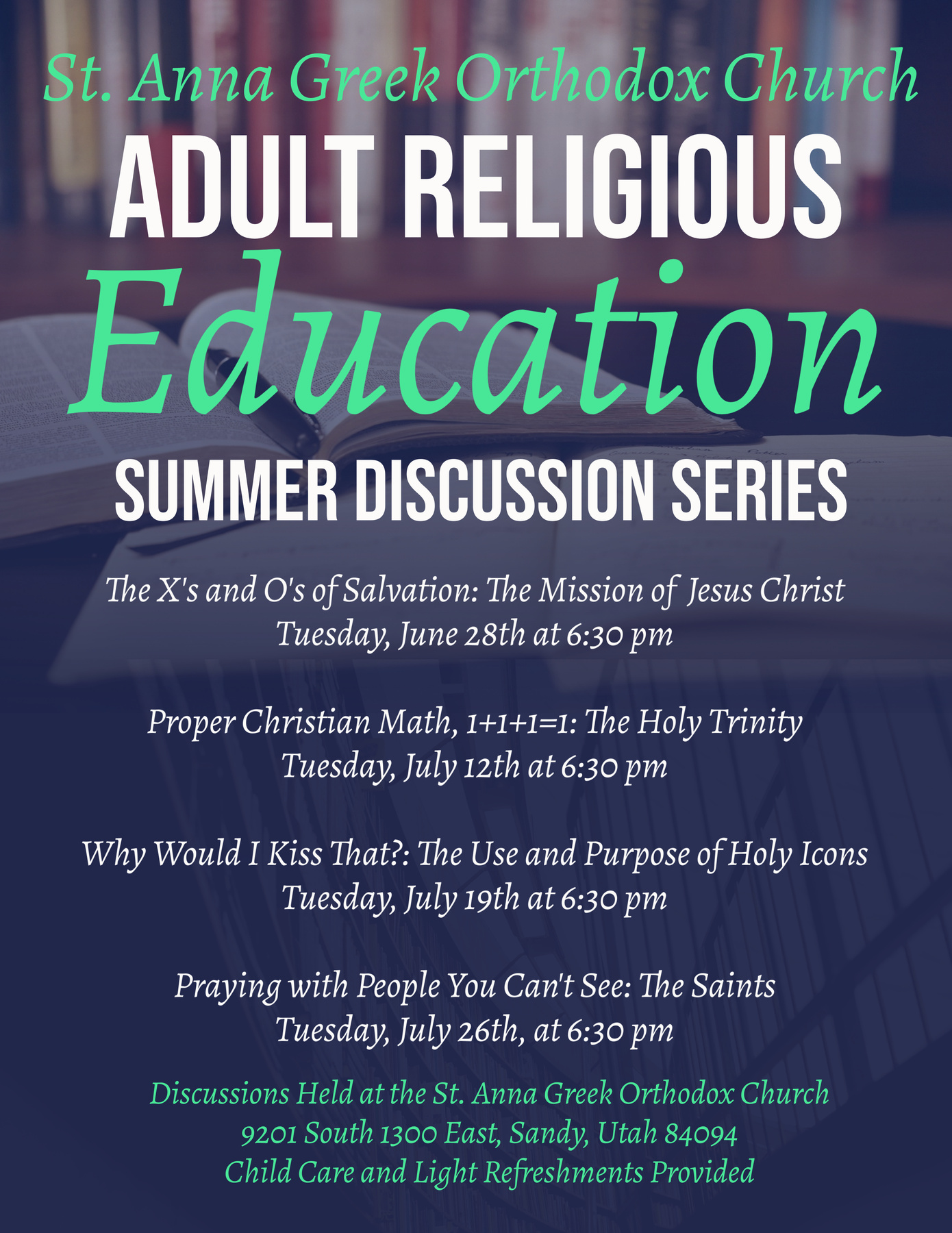
Weekly Bulletin for June 26, 2022 Adult Religious Education Summer Discussion Series 2022

Categories
Bulletins

Weekly Bulletin for June 19, 2022

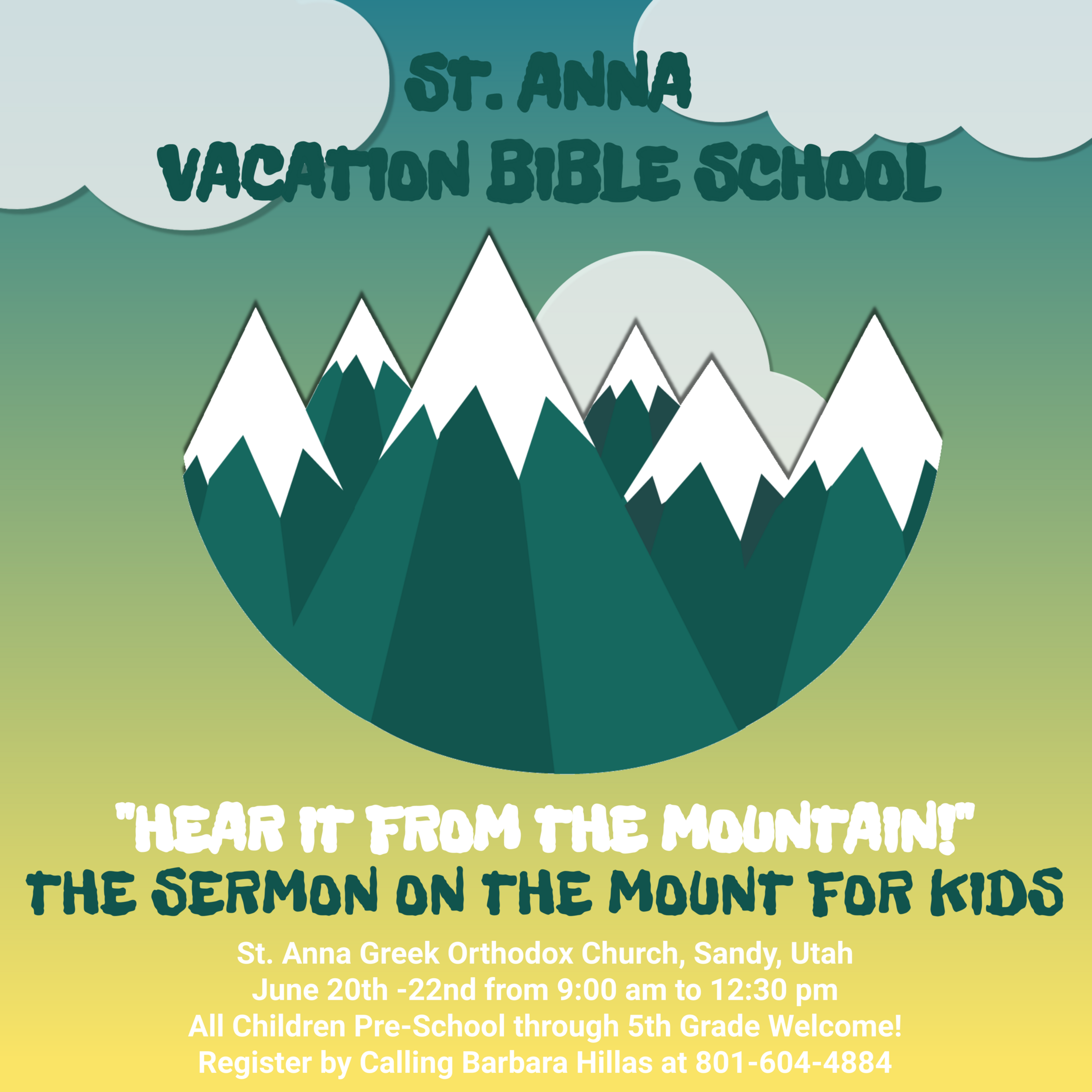
Weekly Bulletin for June 19, 2022 Adult Religious Education Summer Discussion Series 2022 Vacation Bible School 2022

Categories
Pastoral Letters

Pastoral Message June 12, 2022

Dear Brothers and Sisters in Christ,

In the Old Testament Pentecost was the feast which occurred fifty days after Passover. As the Passover feast celebrated the exodus of the Israelites from the slavery of Egypt, so Pentecost celebrated God’s gift of the ten commandments to Moses on Mount Sinai.

In the new covenant of the Messiah, the Passover event takes on its new meaning as the celebration of Christ’s death and resurrection, the “exodus” of men from this sinful world to the Kingdom of God. And in the New Testament as well, the pentecostal feast is fulfilled and made new by the coming of the “new law,” the descent of the Holy Spirit upon the disciples of Christ.

When the day of Pentecost had come they were all together in one place. And suddenly a sound came from heaven like the rush of a mighty wind, and it filled all the house where they were sitting. And there appeared to them tongues as of fire, distributed as resting upon each one of them. And they were all filled with the Holy Spirit . . .

Acts 2:1-4

The Holy Spirit that Christ had promised to his disciples came on the day of Pentecost (Jn 14.26, 15.26; Lk 24.49; Acts 1.5). The apostles received “the power from on high,” and they began to preach and bear witness to Jesus as the risen Christ, the King and the Lord. This moment has traditionally been called the birthday of the Church.

In the liturgical services of the feast of Pentecost, the coming of the Holy Spirit is celebrated together with the full revelation of the divine Trinity: Father, Son, and Holy Spirit. The fullness of the Godhead is manifested with the Spirit’s coming to man, and the Church hymns celebrate this manifestation as the final act of God’s self-disclosure and self-donation to the world of His creation. For this reason Pentecost Sunday is also called Trinity Day in the Orthodox tradition. Often on this day the icon of the Holy Trinity—particularly that of the three angelic figures who appeared to Abraham, the forefather of the Christian faith—is placed in the center of the church. This icon is used with the traditional pentecostal icon which shows the tongues of fire hovering over Mary and the Twelve Apostles, the original prototype of the Church, who are themselves sitting in unity surrounding a symbolic image of “cosmos,” the world.

On Pentecost we have the final fulfillment of the mission of Jesus Christ and the first beginning of the messianic age of the Kingdom of God mystically present in this world in the Church of the Messiah. For this reason the fiftieth day stands as the beginning of the era which is beyond the limitations of this world, fifty being that number which stands for eternal and heavenly fulfillment in Jewish and Christian mystical piety: seven times seven, plus one.

Thus, Pentecost is called an apocalyptic day, which means the day of final revelation. It is also called an eschatological day, which means the day of the final and perfect end (in Greek eschaton means the end). For when the Messiah comes and the Lord’s Day is at hand, the “last days” are inaugurated in which “God declares: . . . I will pour out my Spirit upon all flesh.”; This is the ancient prophecy to which the Apostle Peter refers in the first sermon of the Christian Church which was preached on the first Sunday of Pentecost (Acts 2: 1 7; Joel 2: 28–32).

Once again it must be noted that the feast of Pentecost is not simply the celebration of an event which took place centuries ago. It is the celebration of what must happen and does happen to us in the Church today. We all have died and risen with the Messiah-King, and we all have received his Most Holy Spirit. We are the “temples of the Holy Spirit.” God’s Spirit dwells in us (Rom 8; 1 Cor 2–3, 12; 2 Cor 3; Gal 5; Eph 2–3). We, by our own membership in the Church, have received “the seal of the gift of the Holy Spirit” in the sacrament of chrismation. Pentecost has happened to us.

The Divine Liturgy of Pentecost recalls our baptism into Christ with the verse from Galatians again replacing the Thrice-Holy Hymn. Special verses from the psalms also replace the usual antiphonal psalms of the liturgy. The epistle and gospel readings tell of the Spirit’s coming to men. The kontakion sings of the reversal of Babel as God unites the nations into the unity of his Spirit. The troparion proclaims the gathering of the whole universe into God’s net through the work of the inspired apostles. The hymns “O Heavenly King” and “We have seen the True Light” are sung for the first time since Easter, calling the Holy Spirit to “come and abide in us,” and proclaiming that “we have received the heavenly Spirit.” The church building is decorated with flowers and the green leaves of the summer to show that God’s divine Breath comes to renew all creation as the “life-creating Spirit.” In Hebrew the word for Spirit, breath and wind is the same word, “Ruah.”

Blessed are You, O Christ our God, who has revealed the fishermen as most wise by sending down upon them the Holy Spirit: through them You did draw the world into Your net. O Lover of Man, Glory to You.

Apolytikion of Pentecost

When the Most High came down and confused the tongues, he divided the nations. But when he distributed the tongues of fire, he called all to unity. Therefore, with one voice, we glorify the All-Holy Spirit!

Kontakion of Pentecost

The Great Vespers of Pentecost evening features three long prayers at which the faithful kneel for the first time since Easter. The Monday after Pentecost is the feast of the Holy Spirit in the Orthodox Church, and the Sunday after Pentecost is the feast of All Saints. This is the logical liturgical sequence since the coming of the Holy Spirit is fulfilled in men by their becoming saints, and this is the very purpose of the creation and salvation of the world. “Thus says the Lord: Consecrate yourselves therefore, and be holy, for I your God am holy” (Lev 11.44–45, 1 Pet 1.15–16). (From OCA)